In the Bible, in the book of Genesis more exactly, God expels Adam and Eve from paradise, cursing them like this at that moment : “By the sweat of your brow you will eat your food until you return to the ground, since from it you were taken; for dust you are and to dust you shall return”. Hence the proverb referring to the work that we all know. For most people, there is nothing more dignifying than to tire oneself to death for the sake of work; at every middle-class table in Chile, one has once talked about our parent’s effort to bring the bread and the dreams accomplishment that hard work provides. This belief about work has come to justify precarious and extreme working conditions, naturalized by society and that are compared or equated with slavery, as for example in Chile: long hours of sun-worked time for postal workers; schedules that do not include lunch, breakfast, or toilet hours for public transport workers; no accident and illness protection for paid workers; and a long list in which each wage earner would have something to contribute. We continue to work with the promise that at some point it will end and our life could be able to begin in fullness, because enjoyment and life happens outside of working hours, within work there is only subjection, body and mind subdued to the process of production. The working body hopes to live that time after labor hours, but the truth for most is that work ends up soaking every hour of the day, every hour of life.
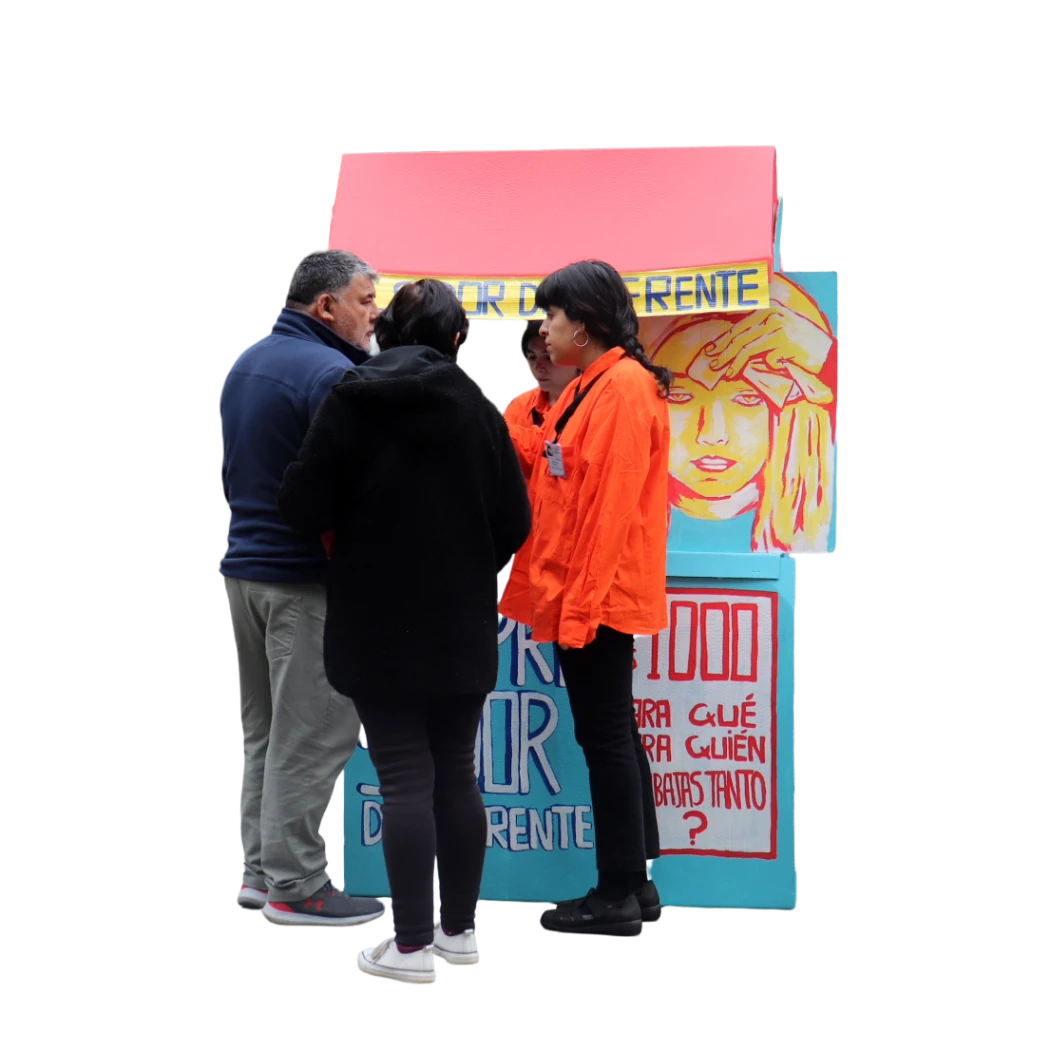
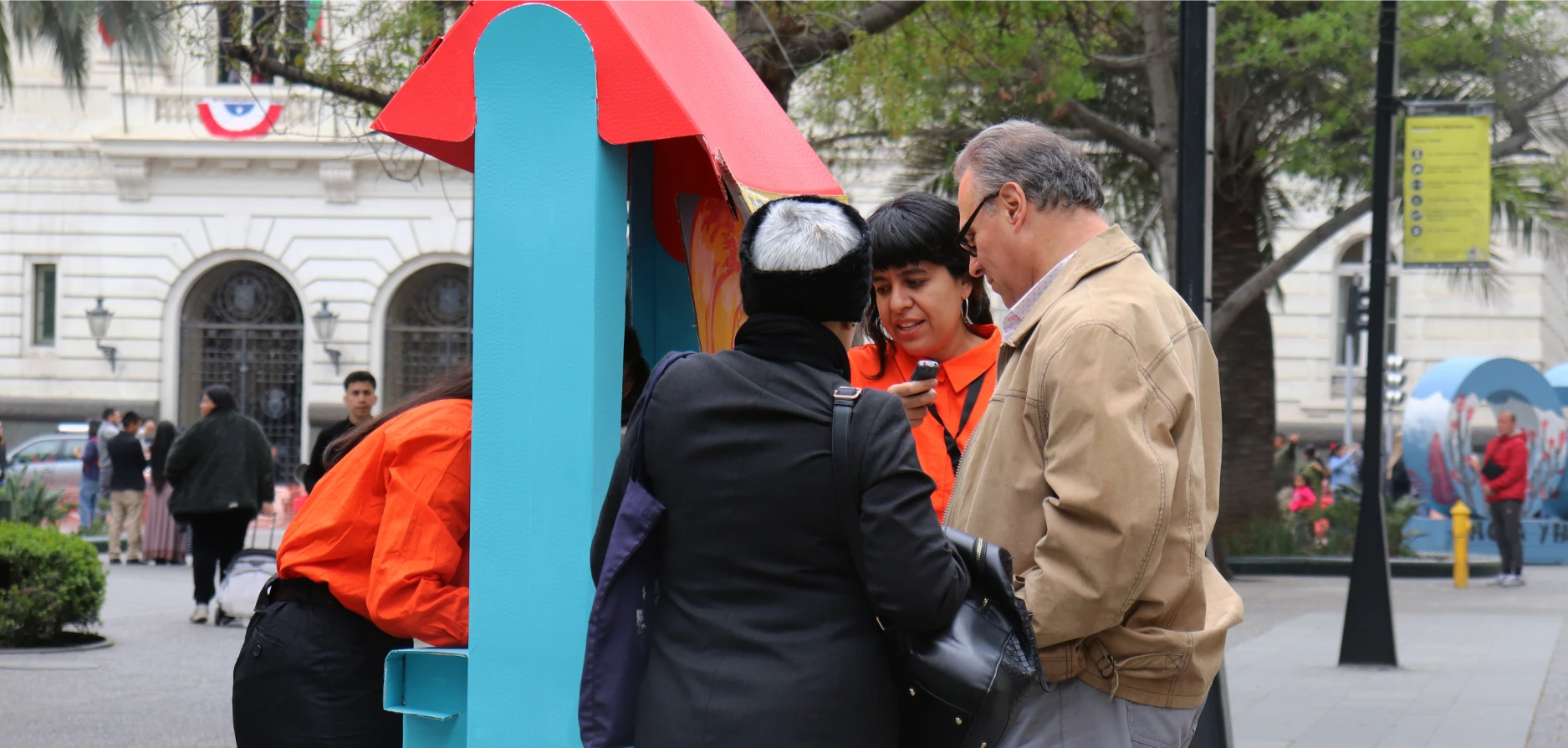
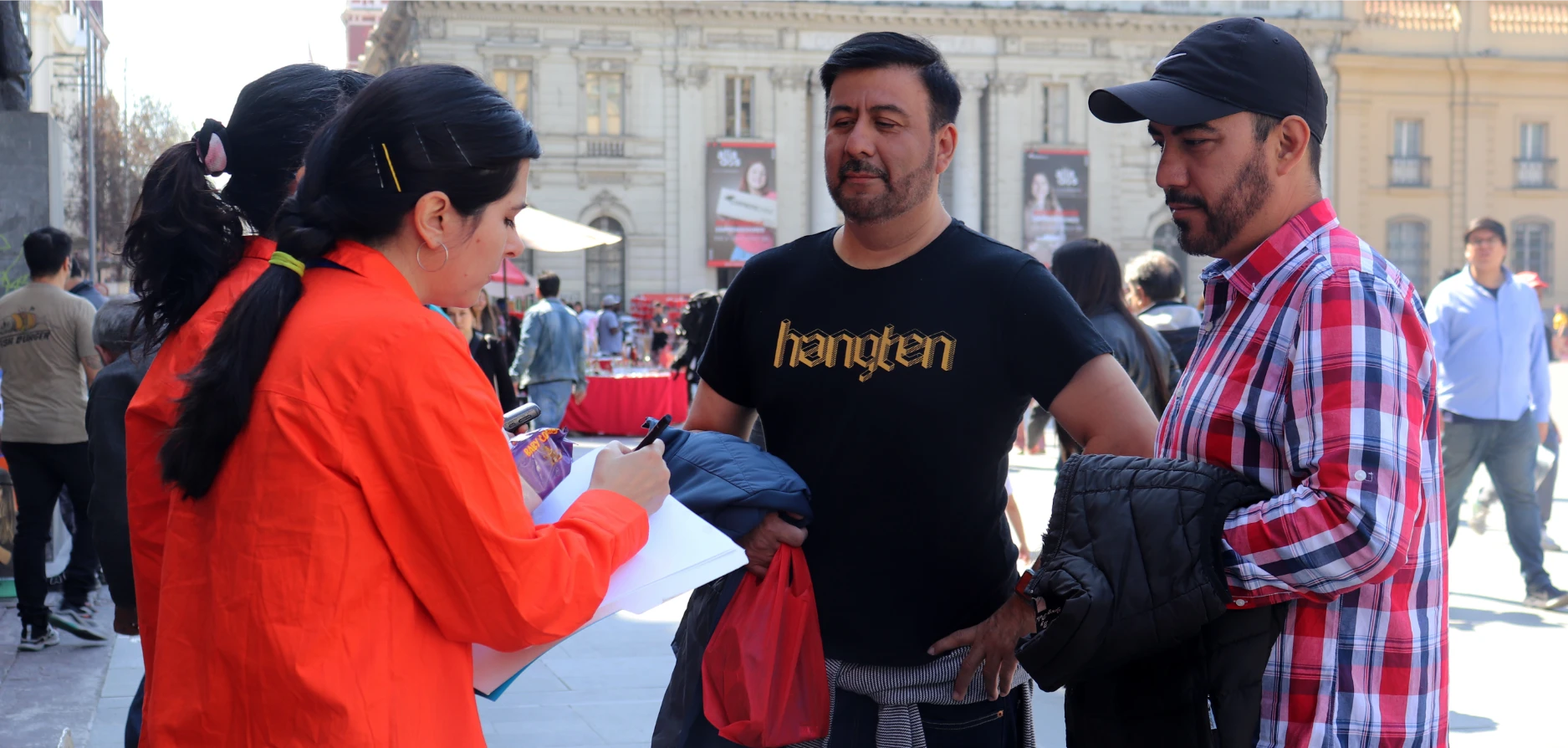
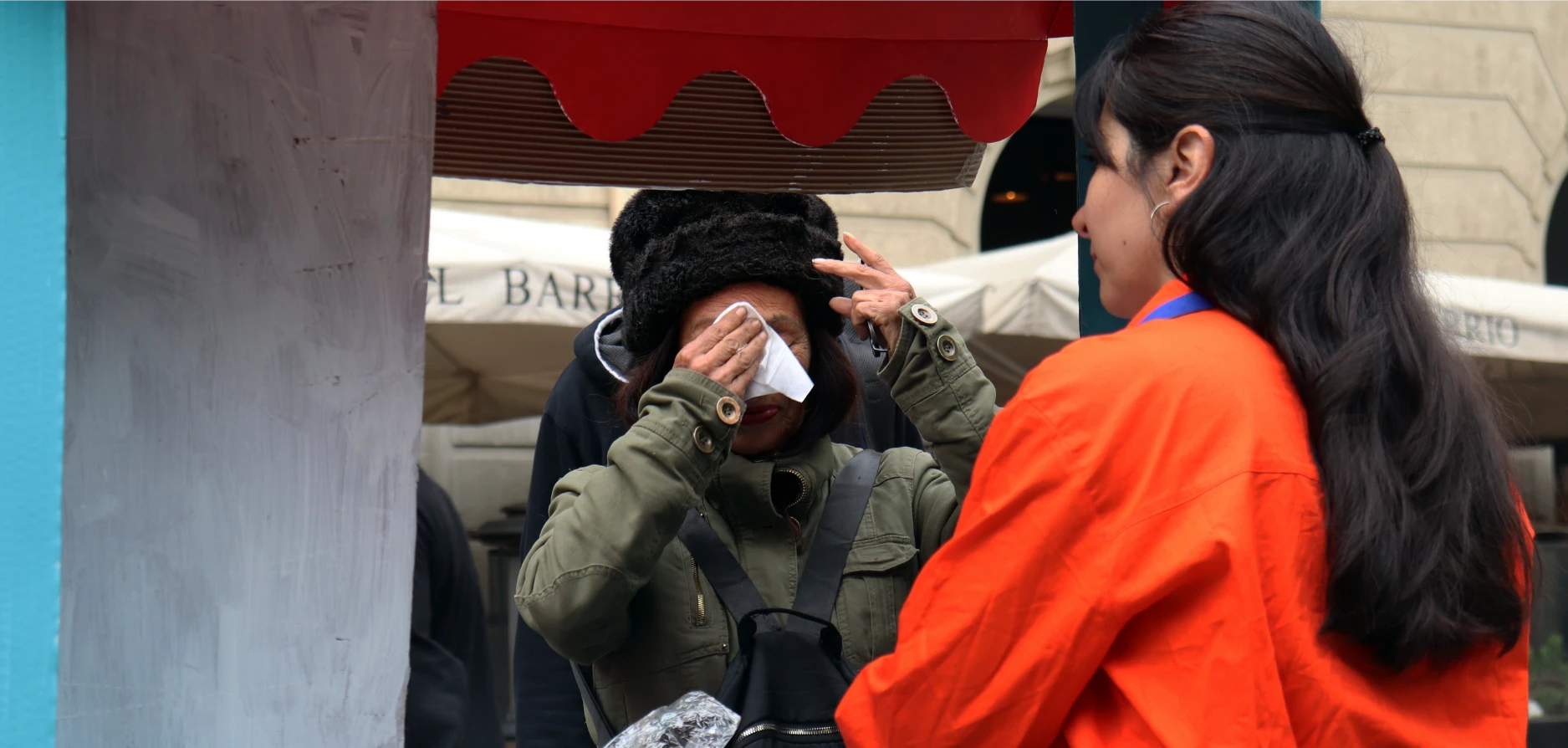
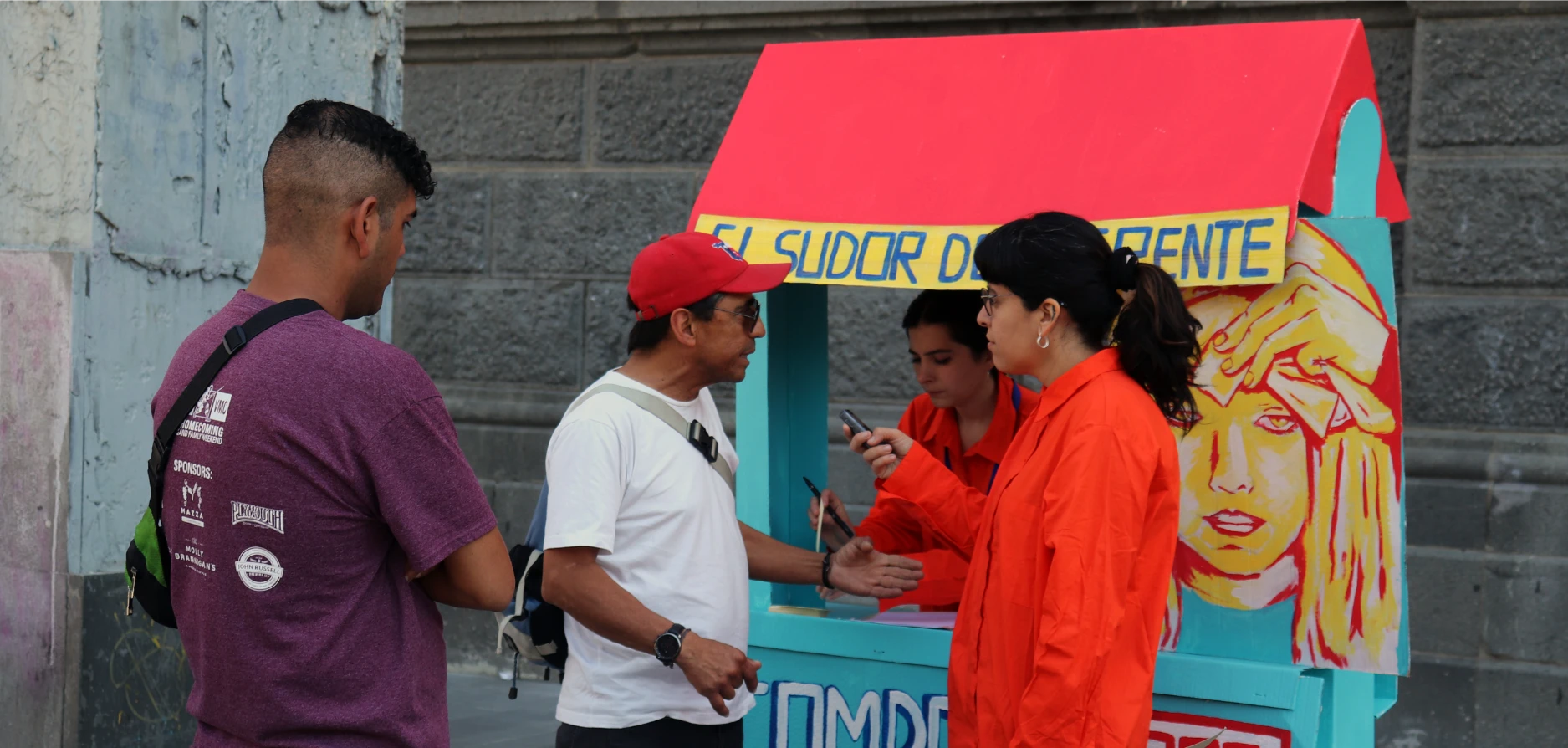
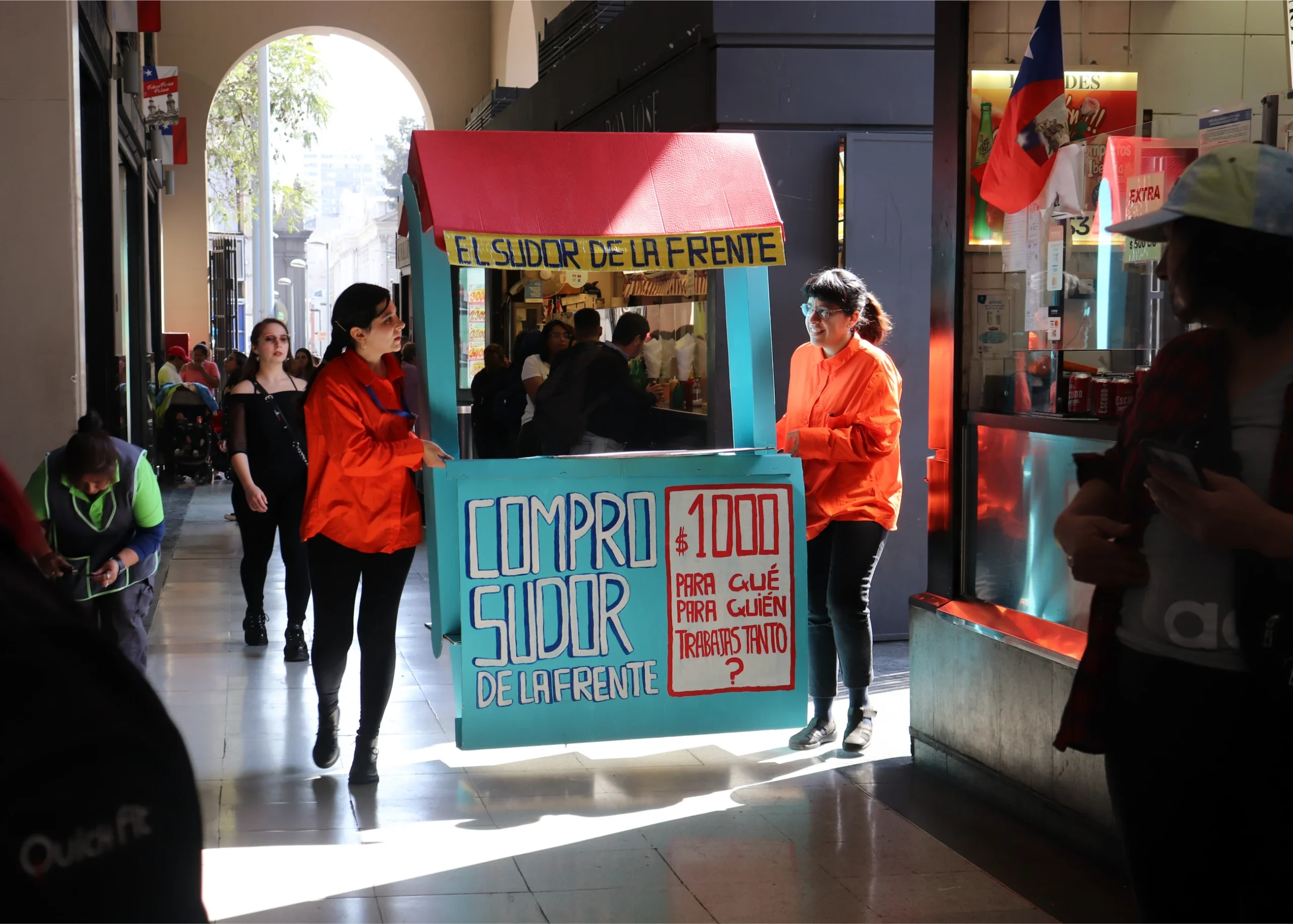
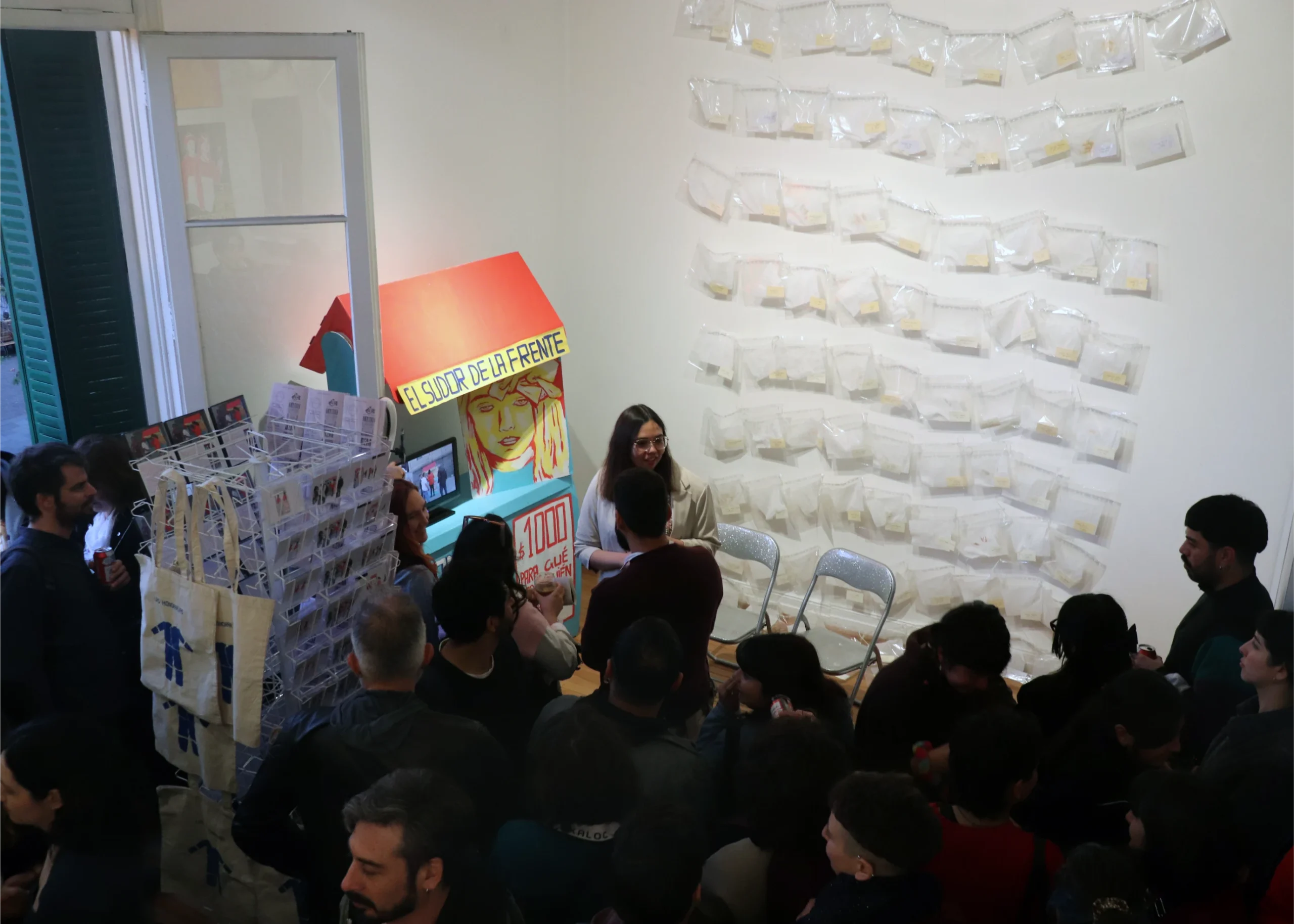
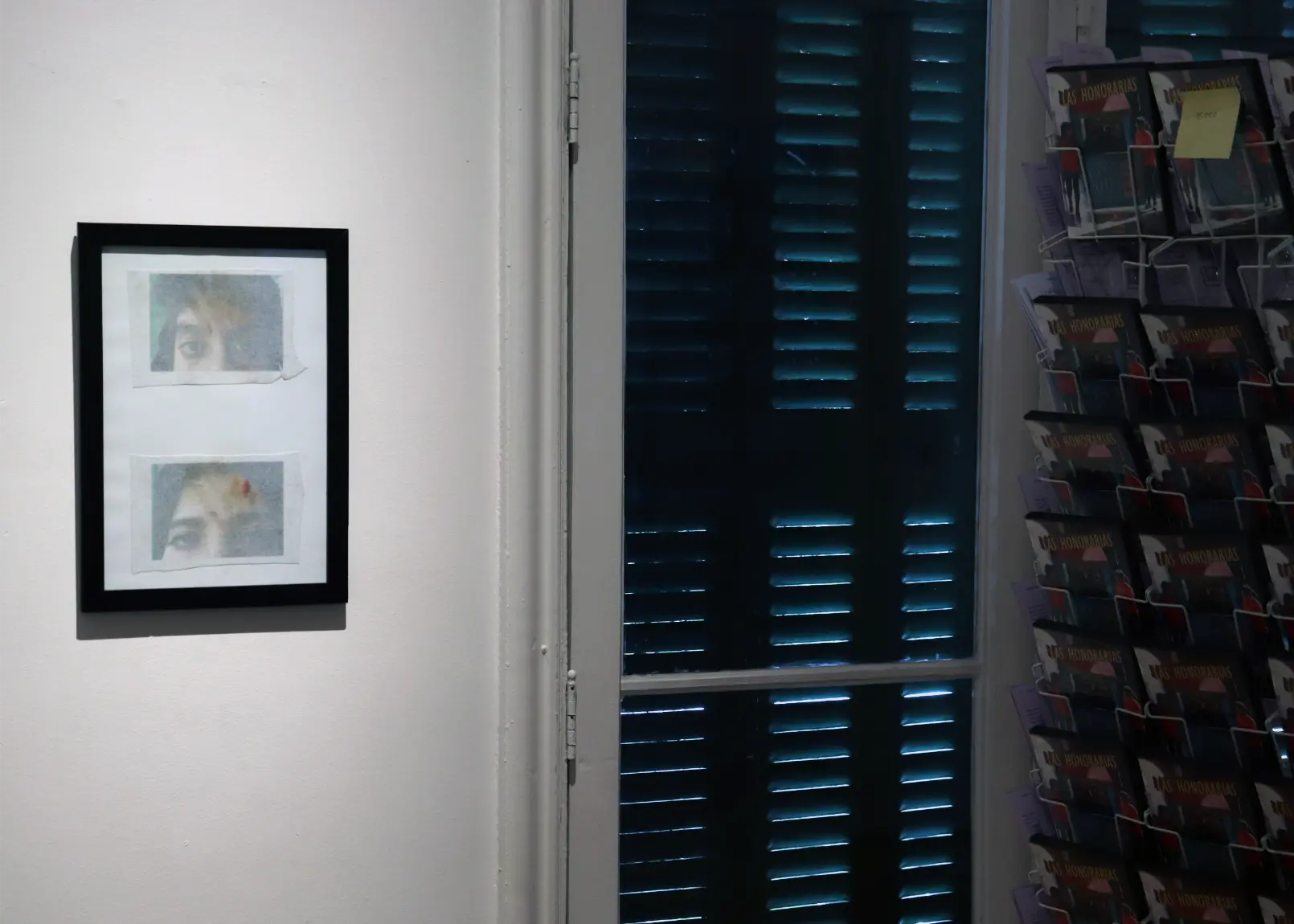
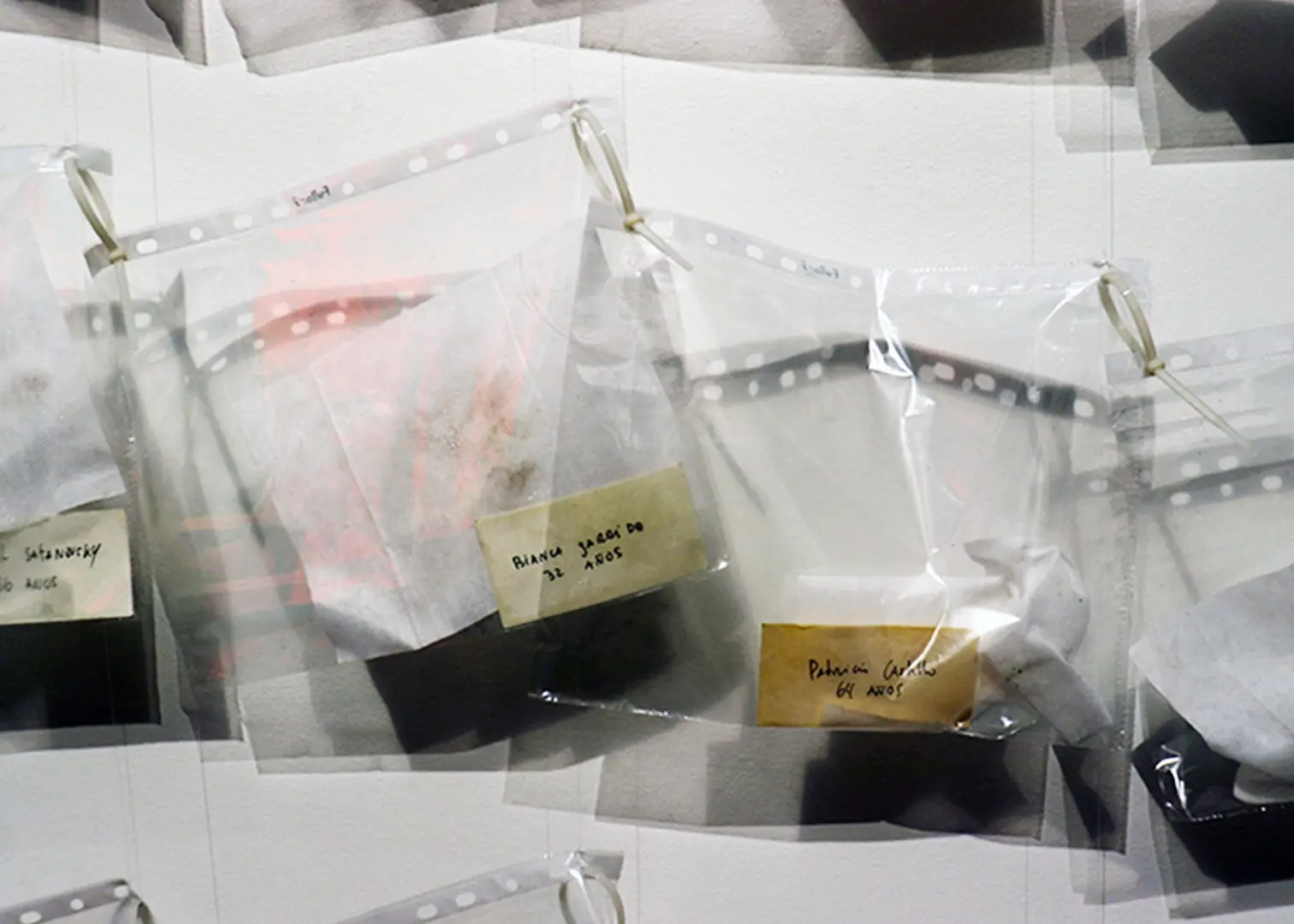
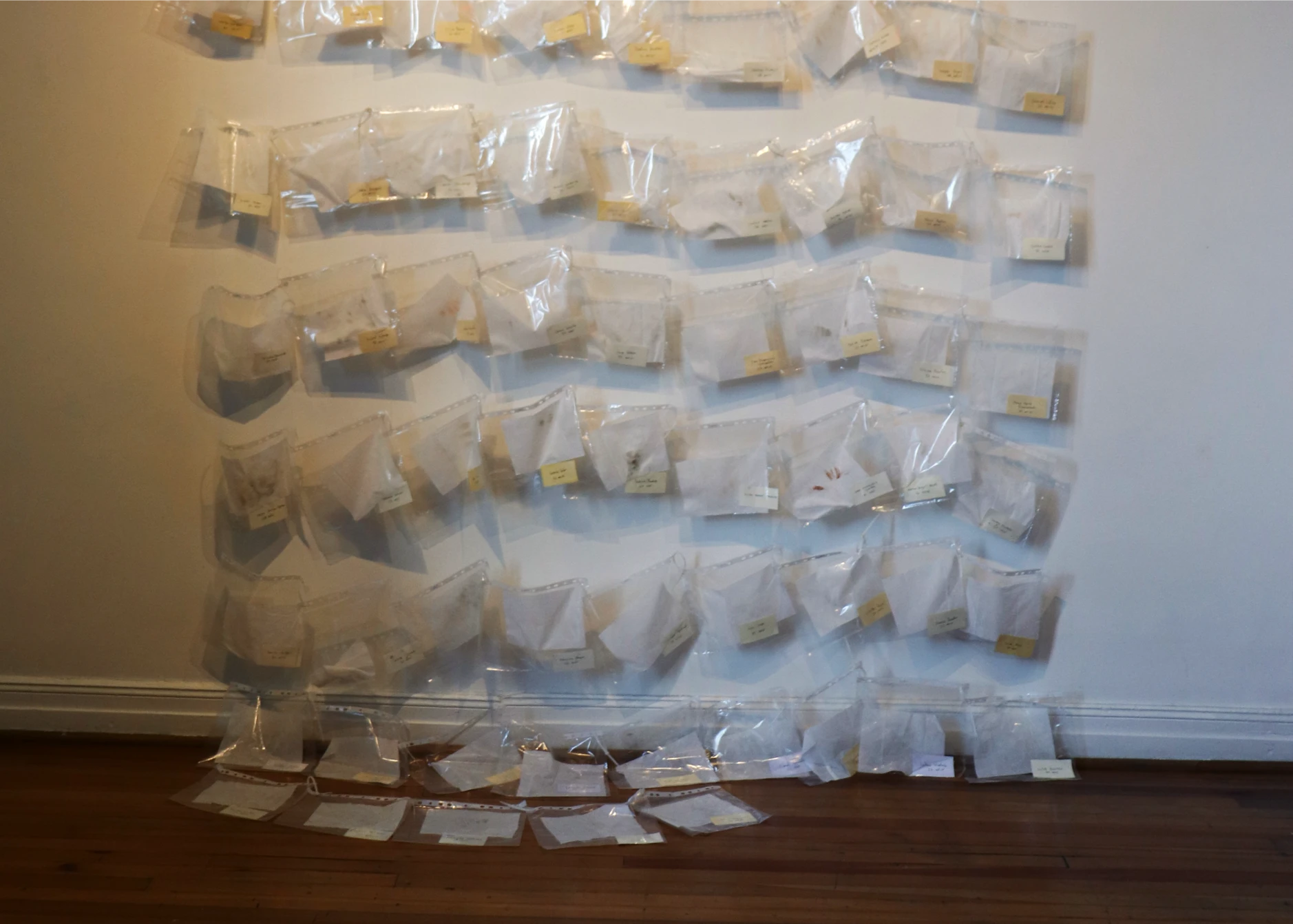
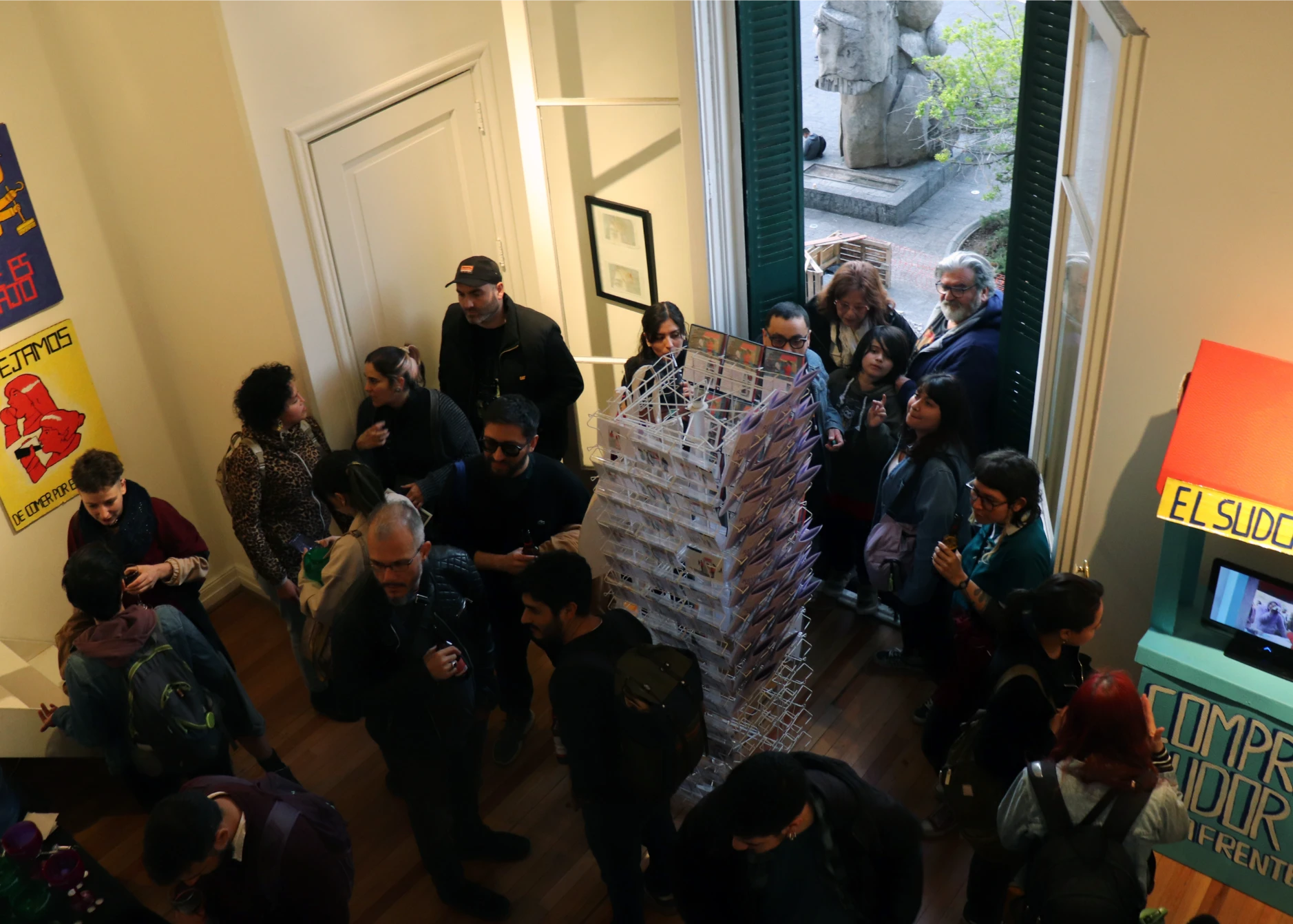
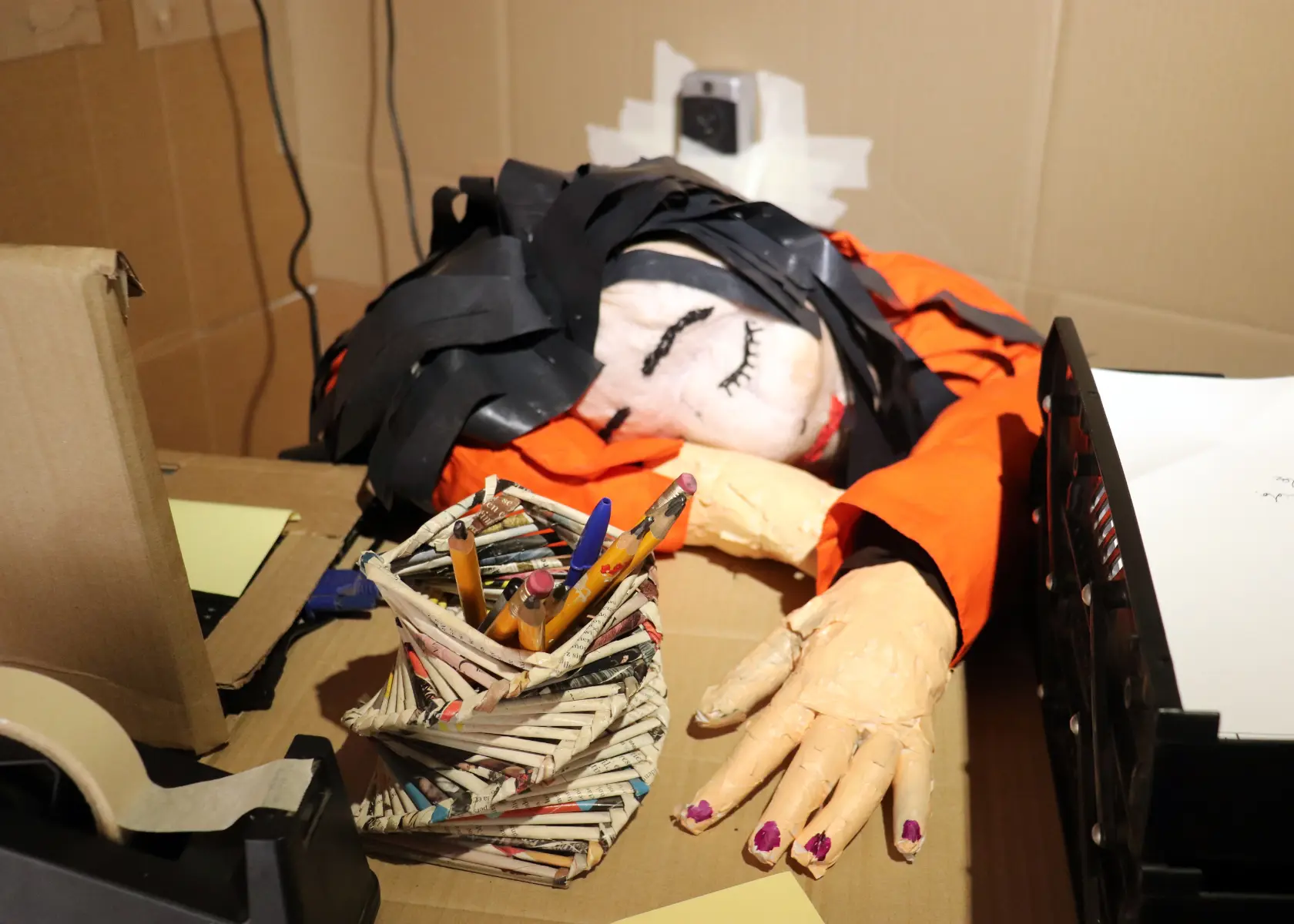
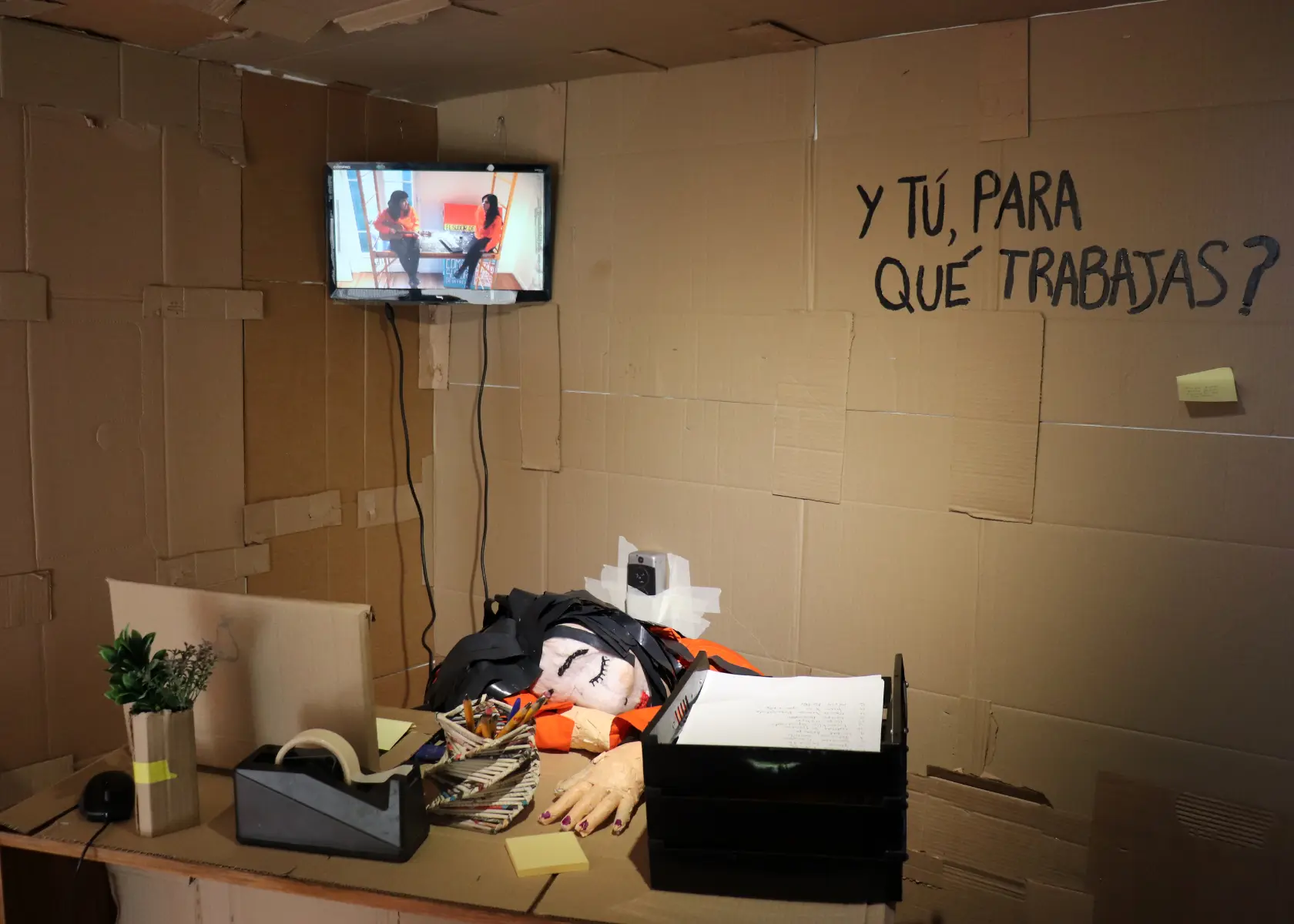
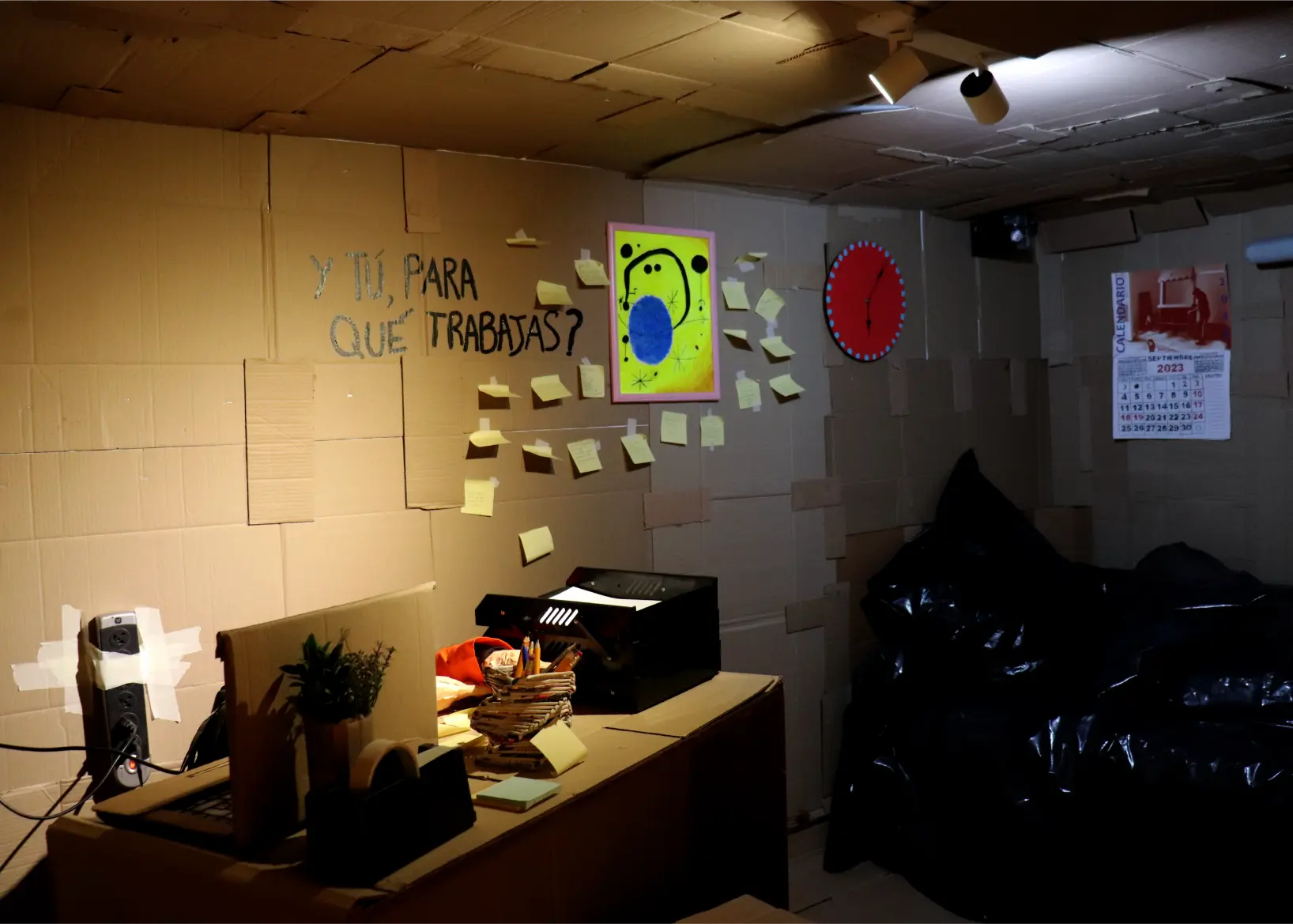
From these ideas was elaborated the intervention, in which it sought to propose a reflection on what has been said above. A booth was installed in Plaza de Armas where an exchange between the artists and passersby took place. The action consisted of paying $1,000 pesos for each person’s forehead sweat, while asking each participant about their most important ambition or desire related to the job: Why do you work so hard? After the intervention, an elaborate network of plastic folders and bindings was installed in the gallery, containing the swellings of each person, each cloth with the name and age of the participant, a video recording of the activity, the booth occupied in the intervention and an audio device that emitted throughout the room the responses of the participants. To this were added in one canvas the sweats of the two members of the collective and 6 paintings inspired by Soviet propaganda, which include slogans about artistic work; with these last two works the installation incorporates the gaze of the very collective as art workers.